Gravity Game
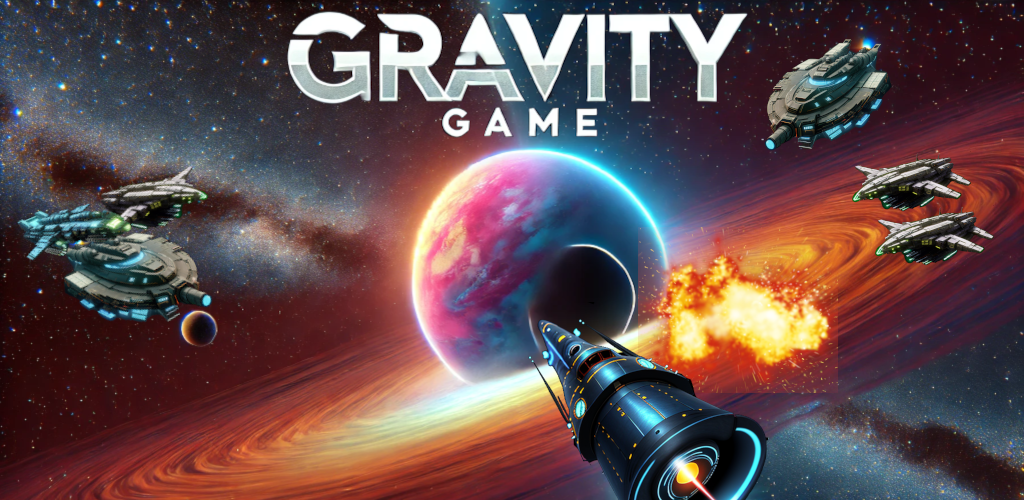
A sci-fi online strategy game for Android.
Game Guide
Resources
Understand the resources that drive your empire, from biomass and metals to research and expeditions.
Districts
Discover the districts that shape each planet and define how it produces, grows, and expands.
Production
See how to configure your planets, set production priorities, build districts, and expand your empire.
Technologies
Discover how research unlocks new district modes, logistics, expansion, military production, and empire-wide upgrades.
Build your empire among the stars
Gravity Game is a sci-fi online strategy game for Android where you build and develop your own interplanetary empire, expand across planets, manage production, and fight strategic battles against other players.
The long-term vision of the game is to combine two layers of gameplay into one connected experience:
- a macro layer, where you grow and manage your empire in real time
- a battle layer, where players face each other in tactical combat
Our goal is to create a strategy game that rewards thoughtful decisions, remains fair to players, and avoids the usual pressure mechanics common in online games.
What the game is today
Gravity Game is currently focused on its battle gameplay, which began as a smaller part of a much larger strategy concept and has gradually developed into a standalone experience of its own.
In battle, players build the structure of their fleet and try to capture the opponent’s base before the opponent captures theirs. Battles are designed as turn-based tactical encounters where both players prepare their moves, and after both confirm, the moves are executed simultaneously.
This creates a distinctive kind of decision-making: success depends not only on what move you choose, but also on when to commit, when to reposition, and when retreat is the better strategy.
A standard player battle is designed to be a relatively compact experience, typically around 10–15 minutes, with the possibility of larger and longer formats in the future.
The long-term vision
Gravity Game is intended to grow into a broader online strategy game in which battles are only one part of a larger empire-building system.
Each player begins with a single home planet and gradually expands outward. At first, development is focused on building a stable economic base. As the empire grows, economic expansion becomes more demanding, and military expansion becomes increasingly meaningful.
The full vision connects empire management and combat into one system:
- your empire influences the conditions of battle
- battle results influence the development of your empire
- expansion is achieved through both planning and conflict
The goal is not to create a game that constantly pressures players to stay online, but one that invites them to return on their own terms.
Core design principles
Strategy first
Gravity Game is built as a competitive strategy game. Victory should come from better decisions, better planning, and a better understanding of the situation — not from repetitive chores or artificial power advantages.
No pay to win
We do not want Gravity Game to include pay-to-win mechanics at any level. Financial support should help development, not buy victory.
No forced daily routine
The game is being designed without “daily task” systems that force players to log in constantly. We want players to enjoy the game when they choose to, not because the game punishes them for leaving.
Macro + micro gameplay
The larger vision of Gravity Game is built around two connected layers:
- Macro gameplay — long-term empire development, planets, economy, growth, and logistics
- Micro gameplay — direct battles between players in a tactical combat system
These two layers are meant to support each other rather than exist as separate games.
Meaningful asymmetry
Planets should not all feel identical. Over time, different conditions, development paths, and strategic situations should make each empire feel more unique and less solvable by a single universal guide.
Game structure
Empire layer
In the empire layer, the player starts with a single planet and gradually develops the infrastructure, economy, and research necessary for further expansion.
The long-term idea is that:
- smaller empires encourage more all-purpose development
- larger empires encourage specialization between planets
- strategy shifts from micromanaging one world to building relationships between many worlds
This should create a sense of growth where the player’s decision-making evolves together with the scale of the empire.
Battle layer
The battle layer is focused on tactical duels between players.
Battles are planned in turns, but the execution is simultaneous once both players confirm their choices. Different ship types are designed to be useful in different situations, and the player must adapt not only to the battlefield, but also to the intentions of the opponent.
In the broader design, battles may exist in different modes, including:
- competitive battles connected to empire progression
- friendly battles with equalized starting conditions
- rating-based or freely arranged duels
Over time, this should allow both meaningful competition and lower-pressure play options.
What makes Gravity Game different
We want Gravity Game to stand apart from many classic online strategy games in several ways:
- a focus on fair competitive design
- no dependence on pay-to-win systems
- fewer but more meaningful resources
- less pressure to stay online constantly
- a stronger connection between economy, expansion, and combat
- strategic depth built from interacting systems rather than artificial grind
Our aim is to make the game engaging not because it controls the player, but because it offers interesting decisions.
Learn more
To explore the game in more detail, continue to the individual sections: